
Have you ever thought about what a public park really is?
It’s not just a garden with a few jhoolas, benches, and a walking track.
It’s a promise. A promise of a small piece of the world that belongs to everyone. And to no one in particular.
When you think of a public park or a garden, you imagine fresh air, children playing, families enjoying picnics, and couples, both young and elderly, catching a moment alone. It’s a place where a community can simply be.
At least, that was the vision we had for Udaan in Udaipur, Rajasthan.
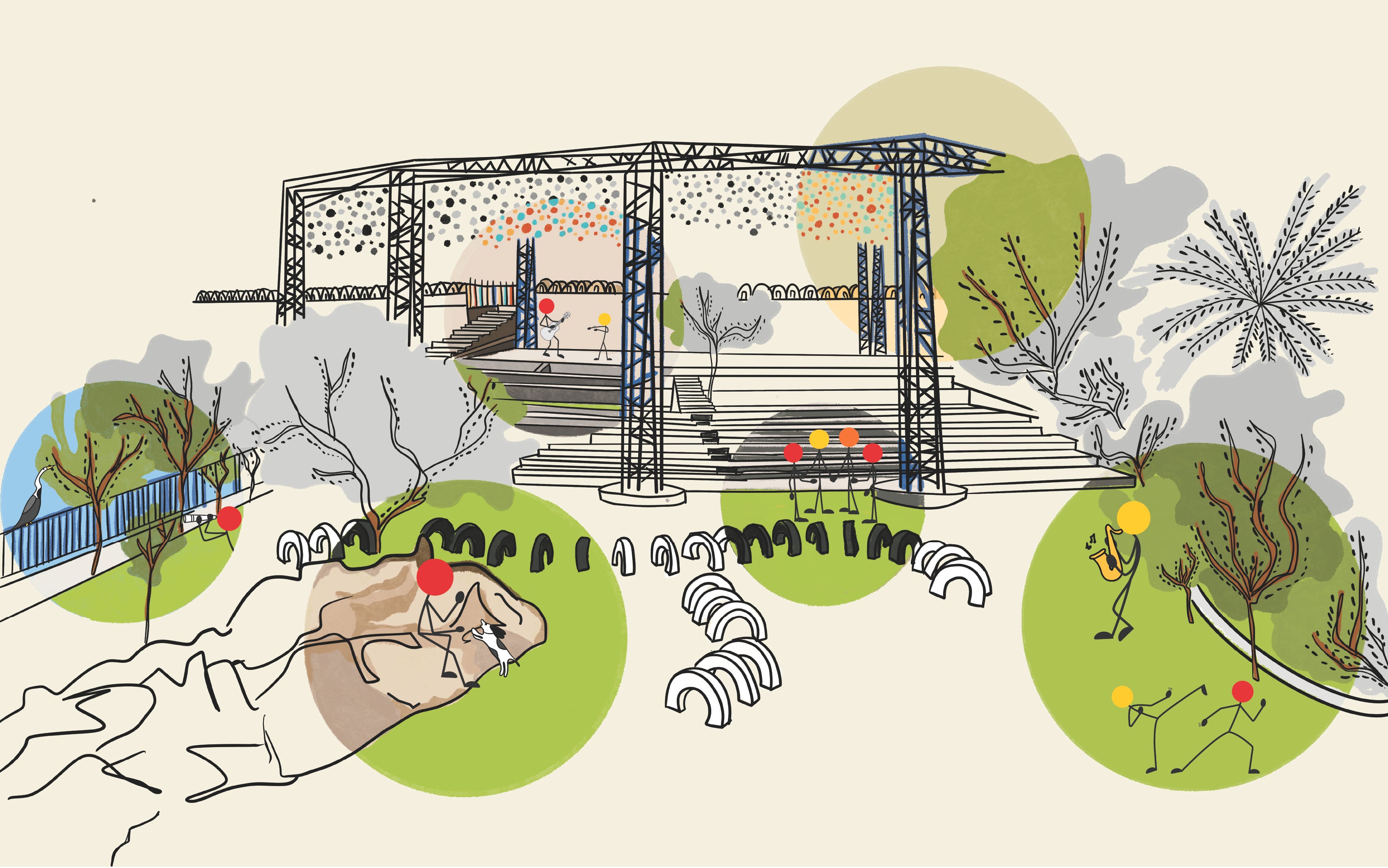
When we began building it in late 2020, we pictured a vibrant, safe, and joyful new addition for the neighbourhood. A promise we were excited to keep.
But promises, we learned, are fragile. And sometimes, trouble arrives before the promise is even fully formed.
Trouble Before Day One
The conflict began not after the park was opened, but while it was still a work in progress.
The site was a mess of construction material, newly planted saplings, and tyres waiting to be repurposed into planters and swings. Security guards were present from the start, but their job was simple: to guard the construction material.
The challenges, however, weren’t just about protecting the materials.
Some locals saw the unfinished park as a convenient dumping ground, driving by to fling plastic bags of waste over the fence. And a group of young boys began to see the construction site as their turf. They would challenge our contractors, trying to intimidate them.
Shreeraj, one of our team, remembers how scared the labour team was. The threats were escalating. “Hum apne bhaiyya ko bula lenge,” they’d say, “fir woh aapse niptenge.” We all knew what that meant.
The tension was so thick that twice, the team stopped work entirely, afraid of a physical fight.
It all came to a head one afternoon.
Nandita, who leads our work on green spaces, went to the site to figure out what was happening. As she began talking to the contractors, the same group of boys approached, their body language confrontational. They were ready for a fight.
The contractor, Kamlesh, and the guards immediately grew protective. They warned Nandita not to engage. But she saw a wall of anger that could only be met by something unexpected.
She walked straight towards them.
She didn’t shout, she didn’t threaten. In the face of their aggression, she did something that defied all logic. She held out her phone and said calmly, “Agar koi aake hume maarna-peetna chahta hai to yeh lo, mera phone, aap bula lo apne bhaiyya ko.”
The boys were shocked. They were prepared for an argument, for a fight. But they didn’t know how to react to this quiet show of strength. They hesitated, realising they had no move left, but just walked away as Nandita stood her ground.
That single act diffused the immediate hostility towards our people. The harassment stopped. But the park’s own trials were just beginning.
A Different Kind of Attack
With the human tension eased, the construction continued. The swings were installed, and beautiful, colourful bird hangings were put up on the poles. The park was starting to look like the promise we had envisioned.
But that promise was about to be systematically dismantled.
It became a routine – Kamlesh’s team would fix a swing one week, only to find its ropes sliced clean with knives the next. They would replace the saplings, only to find them uprooted a few days later. Tyres we’d installed were ripped out and thrown into the nearby lake. Boys were climbing the tall poles just to tear down the colourful bird hangings.


Each repair felt temporary, almost futile.
It was frustrating and demoralising. The constant repairs were draining our time, budget, and our motivation. We were stuck in a loop of repair and destruction, and we were losing. We started to ask ourselves the hard questions. We questioned our judgement. We wondered if community parks were even possible.
The Question of the Guards
So what did we do?
The security guards were still on site, scheduled to stay until all the construction was done. A suggestion was made: why not just increase their numbers to police the park and stop the vandalism?
It was tempting. But it didn’t feel right. A public park shouldn’t be a policed space. It would be like trying to hold sand in a fist – the tighter we gripped, the more we’d lose the very essence of what we were trying to build.
An idea had been floating around the team, one that leaned into the Dharohar value of trust. What if, instead of adding more control, we removed it completely?
We had no idea if it would work. But we figured it couldn’t get much worse. Once the final canopy was installed and the construction was officially over, we had to make a choice.
And so we did it. We let the guards go.
The Hard Work of Trust
The park didn’t magically heal overnight. The vandalism didn’t stop in an instant. The real, patient, painstaking work started the moment the guards left.
Our team started visiting the park, not as managers with clipboards, but as neighbours.
They began talking to the parents in the nearby colony, to the elders sitting on the benches, to the kids who were causing the trouble. The message, repeated in all the small conversations, was simple and consistent: “This is your park. It belongs to you. If it thrives, it is your success. If it breaks, it is your loss. We can’t protect it for you, only you can.”
We started filling the park with life. We organised Art Jams, where people who might have never met before came together to paint and create. We held small music sessions and workshops.


We wanted to get rid of the negative energy that had engulfed the park – and replace it with a wave of community spirit, reminding everyone of the park’s true purpose. And the greatest source of support in making all this happen came from the community itself, who didn’t just participate in these events, but joined hands in making them happen.
The change was slow. It wasn’t one big event, but hundreds of small interactions. It was a quiet victory of trust. A campaign built with conversation and consistency, day after day.
The Park Breathes Again
And then, slowly, we started to see it.
One evening, Shreeraj walked through Udaan – a place that, until then, had only meant stress and conflict to him. But what he saw that evening stopped him in his tracks.
The park was full. Not with troublemakers, but with life. Families were strolling after dinner, laughing. Elders having gentle conversations on the benches. And in one corner, under a lamp, a group of young men who had been the source of so much trouble were peacefully playing a game of Ludo.
The change was real and visible. On her next visit with her grandchildren, Nandita saw the same boys who had once been the troublemakers now gently helping her grandkids on the swings. The unlikely approach was working.


It’s still not perfect though.
The vandalism hasn’t disappeared entirely – nothing ever does. There might still be a broken swing here, a trampled bush there. But it’s now the exception, not the norm. And it’s nothing the community can’t handle. In fact, we now hear from our ally Gourang that he sees his neighbours fixing small problems themselves.
The park has found its own rhythm.
On any given day, you’ll find a musician doing his riaz in one corner, a group of women praying in another, and youngsters practising kick-boxing.
The community has made the park their own.
The Line Between Policing and Trust
So what does it all mean?
Maybe it brings us back to the question we started with: what is a public park? We learned that it’s not our property to be managed. A community park belongs to the community. And they need to be free to use it how they want. Even if all of those ways don’t align with our original vision. And we have to be ok with this.
It does make you think. About the line between policing and trust. Between restriction and freedom. And about what can happen when you decide to bet on the best in people, even when it feels like the hardest thing to do.