
Evening pickup time at Little Dotheads was Shivani’s favourite.
She got to proudly talk about the children and their growth with parents. One day, she was especially excited to speak to Gyaanvi’s mother. For the first time since joining Little Dotheads, Gyaanvi had eaten her lunch on her own.
As soon as her mother arrived, Shivani smiled.
“I wanted to tell you... today Gyaanvi...”
Before she could finish, her mother looked inside the lunchbox.
“She left two bites of her lunch. Why didn’t she finish?”
For a moment, Shivani’s excitement gave way to sadness. Not because the question was unexpected or came from a place of indifference, but because she knows the story she has is about to compete with learnings that are visible and far easier to measure. She answers the question and returns to telling the story.
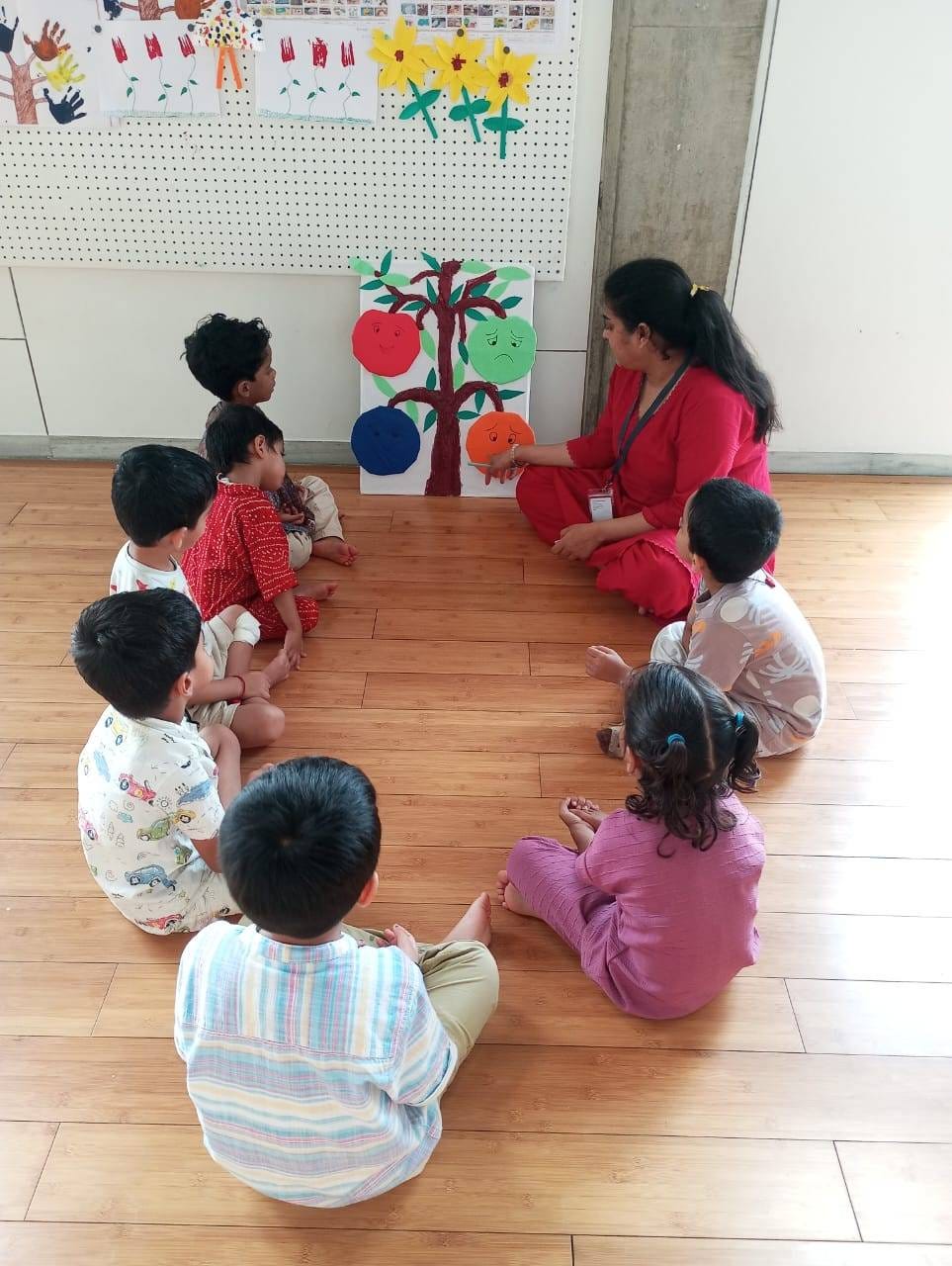
Inside Little Dotheads, lunch moves at the children’s pace. They gather around the table, wash their hands, wait for one another and open their lunchboxes together. There are no instructions to copy, no rush to finish first. Some children begin eating immediately. Others spend the first few minutes watching. Across the table, one child notices how another opens a lunchbox and tries it themselves. Another, who had waited days for someone else to feed them, reaches for a spoon without being asked.
These moments are not accidental.
Shivani and her team have built the routines carefully. Children are encouraged to observe one another, make choices and participate in the rhythm of the day. They learn by trying, hesitating, watching and trying again. Monika, building these routines in the Little Dotheads team, has seen what they can make possible.
A child would only eat if someone followed them around with a bowl at home. At Little Dotheads the child sat with the group, watched the others eat and, after a few days, picked up a spoon independently.
A child had never eaten solid food before joining Little Dotheads. Every meal at home had been blended into a liquid. The child spent days watching the others eat, touching unfamiliar textures and hesitating before gradually beginning to eat solid food.
Watching children learn this way often takes Shivani back to her own childhood. She remembers growing up in a joint family, where learning rarely happened because someone sat her down to teach. It happened in the background of everyday life. She watched grandparents, older cousins, neighbours and siblings. She learnt when to wait, how to help, how to share and how to find her place within a larger group, simply by being part of it. Shivani and her colleagues try to create similar opportunities through everyday routines with the intention that children would learn to make choices and gradually begin doing things on their own. “Of course, what I want to achieve is a lot further away,” she says.
The changes seen in children are rarely dramatic. They appear in small moments and are often sudden pleasant surprises like a child recognising they are full, serving themselves for the first time or copying a friend as they keep their plate after eating. “But these moments are not exactly small,” adds an enthusiastic Monika. They give the tiny nudges needed to keep going.
By pickup time, Shivani has countless stories about helping, trying something new, and asking for help that she excitedly narrates. Parent-teacher meetings give her more time to return to these moments, connecting small observations from different weeks into a picture of how each child is growing. She has learnt to be patient with parents and their responses, especially as they nod and smile at their child’s mealtime stories while waiting to open their notebooks and artworks to check how many stars or ice creams they got this time. Visible learning takes over most of the time, making Shivani realise that her work is as much about adults as children. The remarkable openness to new ideas, shapes, colours and habits, that she has seen in children is harder to find in their parents. However, she has never stopped bringing stories outside of the curriculum to them. She has also started collecting them for herself. Is it a way of measuring her own success? She laughs. “Maybe.” She is still trying to answer the same question herself: How do you help anyone notice learning that doesn’t announce itself?
Today, the lunchbox question still returns. It probably will for a while.
Shivani isn’t trying to replace it.
She is simply hoping that one day, parents will pause long enough to ask other questions too.
(To protect the privacy of children and their families, names and identifying details have been changed. Some incidents have also been adapted or combined while remaining faithful to the experiences shared.)